Bohemian Royalty

December 29, 2019

Tidbits of San Francisco History

Filed under: Uncategorized — Cowgrrrl @ 3:39 pm

I’ve really been enjoying reconnecting with my City by the Bay since moving back to California. Discovering that I have an ancestor who was part of early San Francisco history has added to my sense of connection to this place and the layers of history upon which we walk, literally and figuratively.

Here are a few small things I’ve found recently that shed new light on what life (and death) may have been like for my great-great-great-grandfather, William H. Stephens. One of the original Forty-Niners, he came to San Francisco seeking fortune in 1849, but died miserably in 1850, leaving a wife and six children in Illinois. I blogged about William’s “Triumphant Death Scene” before, as well as my search for his final resting place.

Recently, I found some great articles in the San Francisco Chronicle’s “Portals of the Past” history series by Gary Kamiya:

Seeking gold, the 49ers found a sad, sodden S.F. — The winter of 1849-50 was miserably wet, which helps explain my ggg-grandfather’s death on March 2, 1850.

It’s still the third-dampest November in San Francisco since records started being kept that Gold Rush year …. A high percentage of the 49ers were already in poor health, suffering from dysentery and other illnesses. They were exhausted from the long trek to California, their diet was often unhealthy, much of the city’s drinking water came from shallow, polluted sinkholes, and heavy drinking was rampant.

SF’s 1st street preacher brought God to a godless crowd — William Taylor documented William Stephens’ death in his book, “Seven Years’ Street Preaching in San Francisco.” I’m not usually a fan of street preachers, but I’m grateful for this one.

This article says that “San Francisco was a growing village of 459 people” in September 1847, which piqued my interest. How fast did the city’s population grow during the Gold Rush? Wikipedia says the California Gold Rush began in January 1848 and “brought approximately 300,000 people to California.” The SF-Info site says, “Between January 1848 and December 1849, the population of San Francisco increased from 1,000 to 25,000.” That’s astonishing. We think we have a population boom now!

And this article about how downtown San Francisco is built on old wooden ships includes a trivia question: Where was Happy Valley?

Answer: During the Gold Rush, the sandy area around New Montgomery and Mission streets was called Happy Valley and was the site of a large tent village. Despite its name, Happy Valley was plagued by disease caused by bad water.

William died in a boarding house on Clark’s Point — Broadway and Battery, now the Embarcadero — and was (initially) buried several blocks away in Happy Valley. I was previously told that Happy Valley was roughly bordered by First, Second, Market and Mission streets. Oddly enough, I worked squarely in the middle of that block for a few years.

This photograph shows Happy Valley in 1856:

View over Happy Valley.

(From the wonderful San Francisco Album: Photographs of the Most Beautiful Views and Public Buildings of San Francisco. Credit: DeGolyer Library, Southern Methodist University.)

I wonder when it stopped being called Happy Valley? Now it’s just downtown or South of Market. Or maybe “the area near the Transbay Terminal” or Salesforce Tower.

I’ve been spending part of my holiday break scanning old black-and-white negatives — my own and my dad’s, some taken in San Francisco. I enjoy seeing his visits to the California Academy of Sciences, Golden Gate Park, and Ghiradelli Square, before I was even born. And remembering the trips we took to San Francisco when I was a kid.

It’s fun to make new discoveries and connect the dots between past and present. A friend and I went out for a crab feast last night at an old-school Vietnamese restaurant way out in San Francisco’s Sunset district. It’s crab season! Get it while you can!

And that’s a good metaphor for life.
January 3, 2019

The search continues: Greenlawn, Cypress Lawn and Holy Cross

Filed under: STEPHENS — Cowgrrrl @ 3:45 pm

On Oct. 13, 2018, I visited Greenlawn Cemetery in Colma to continue searching for the grave of my great-great-great-grandfather, William Harrison Stephens. On the advice of a Colma historian, I had started searching Oct. 6 at Woodlawn Cemetery. Greenlawn was my second stop on a list of four possibilities suggested by the historian.

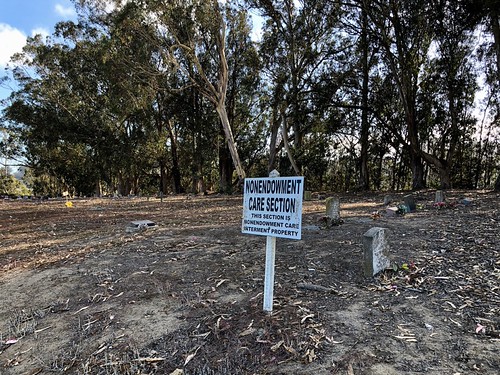
The woman at Greenlawn searched through the cemetery’s interment books, but didn’t find any likely candidates. I explored a bit anyway, particularly fascinated by the “nonendowment section.” Apparently if you’re unable (or unwilling) to pay for eternal upkeep, your grave may be sad and neglected for the rest of time.

Greenlawn Cemetery

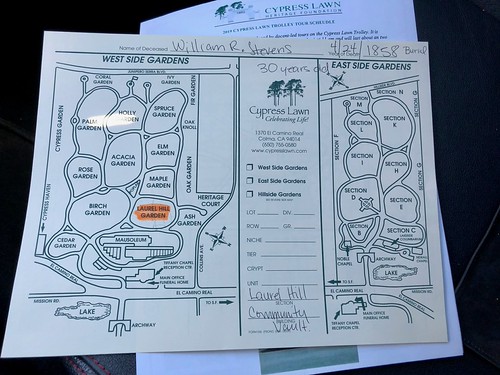
I had intended to complete my search for William H. Stephens in October, but life got busy and I didn’t return to the Colma cemeteries until yesterday. I started with Cypress Lawn, which may have been the fanciest of the four cemeteries I visited. The woman there found one possibility in her computer, a William R. Stephens buried in 1858. My ancestor was originally buried in 1850, but was likely moved several times, so I thought it could’ve been him, with the middle initial mistaken for an R instead of an H. But when I got home, I checked my records: William died at age 35, not 30. Three strikes and it’s out.

Cypress Lawn Cemetery

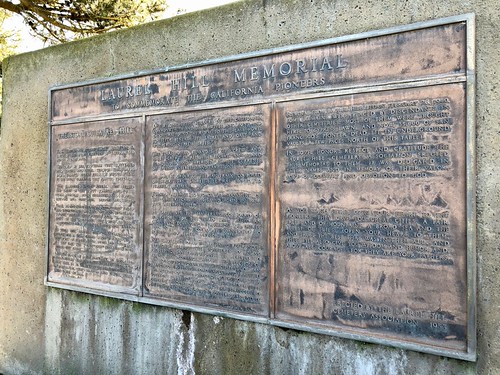
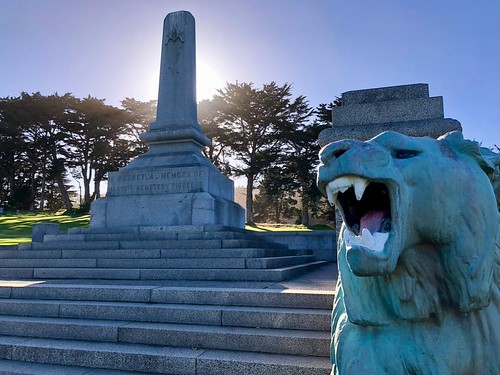
Nonetheless, I visited the Laurel Hill Garden section of Cypress Lawn, which contained the remains of those moved from Laurel Hill Cemetery in San Francisco. A wide expanse of unmarked lawn surrounded the north and west sides of a tall obelisk and a monument titled “Laurel Hill Memorial.”

Cypress Lawn Cemetery

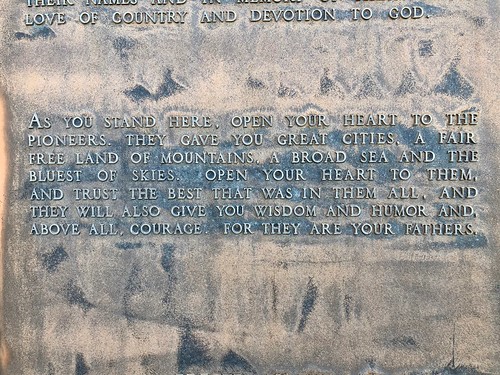
Created in 1953 “To Commemorate the California Pioneers,” this plaque contains a moving tribute to those like my great-great-great-grandfather. His life ended in misery instead of fortune, but at least he had he courage to follow his dreams.

Cypress Lawn Cemetery

I concluded my search with a visit to Holy Cross Cemetery. The woman there found no records likely to be my ancestor, and stopped looking when I confessed he wasn’t Catholic.

I’ll probably never know for sure, and it doesn’t really matter much anyway. But I feel fairly certain that my great-great-great-grandfather was the Wm. Stephens I found in the first place I looked — Woodlawn Cemetery, Tier 17, grave 64, among those moved from the Masonic Cemetery in San Francisco.

My small adventure ended with renewed appreciation for the struggles of my ancestors and determination to make the most of this brief, beautiful life.

Cypress Lawn Cemetery

October 7, 2018

The search begins: Woodlawn Cemetery

Filed under: STEPHENS — Cowgrrrl @ 1:46 pm

I’ve lived near Colma for a little over a year now, and recently decided it was time to start exploring its cemeteries and searching for the final resting place of my great-great-great-grandfather, William Harrison Stephens.

One of the forty-niners who came to California during the Gold Rush, William left his wife and six children in Illinois to seek his fortune. Unfortunately, like many others, he instead found disease and death. He died of dysentery at age 35 in 1850 in a San Francisco boardinghouse, and was buried in a place called Happy Valley. My Great-Great-Great-Grandfather’s “Triumphant Death Scene” was told in a book written by a street preacher who ministered to him.

I knew that most San Francisco cemeteries were moved to Colma, so in 2016, I started searching for William H. Stephens by contacting the Colma Historical Society. I received a wonderfully helpful response from a docent there.

I hatched a plan to visit at least the four cemeteries the docent suggested. Because William’s grave was probably moved several times, I knew it was unlikely I’d find it with any certainty. If it existed at all, I assumed it was most likely an unmarked, mass grave.

I started yesterday at Woodlawn Cemetery, mainly because it’s at the beginning of the “strip” of cemeteries in Colma. Also, the entrance looks like Disneyland for dead people.

Woodlawn Cemetery

The gentleman in the office was helpful, bringing out two lovely old interment books.

Woodlawn Cemetery

Woodlawn Cemetery

I found two possibilities in Section K, and set off in my car to explore the huge cemetery.

Woodlawn Cemetery

The cemetery isn’t particularly well-marked, and it took a while to orient myself. At first, I was pretty sure I was in the wrong area, because the names were mostly Chinese and the dates were too recent. Regardless, cemeteries are always fascinating places to explore.

Woodlawn Cemetery

Woodlawn Cemetery

Finally, in the very back, I found what seemed to be the correct part of Section K. The final resting place of William W. Stevens (a common misspelling, even in the street preacher’s tale; although the middle initial makes it less likely to be my ancestor) — Tier 10, grave 53 — appeared to be unmarked.

Woodlawn Cemetery

A little farther back appears to be the location of Tier 17, grave 64, where Wm. Stephens is buried. There is a large monument noted on the map as the “Masonic Memorial.” It is inscribed: “In Perpetual Memory of Masonic Cemetery Pioneers.” I gather the unmarked lawn behind and around this monument holds the graves of those moved from the Masonic Cemetery in San Francisco.

Woodlawn Cemetery

This area is surrounded by tombstones on three sides, and a fence next to Junipero Serra Boulevard on the very back. Looking northwest from the Masonic memorial:

Woodlawn Cemetery

Looking northeast from the near the back fence, toward the Masonic memorial:

Woodlawn Cemetery

I feel it’s very possible this is indeed the final resting place of my great-great-great-grandfather. Perhaps I just want it to be. I’ll probably never know for sure.  In any case, I’ll explore the other possible cemeteries in the coming weeks.

Related Links:

The Dark History of San Francisco’s Cemeteries (7×7)

Masonic Cemetery (Defunct) (Find a Grave)

My Colma Cemeteries photo album on Flickr

Searching for William H. Stephens

Filed under: RANDALL,STEPHENS — Cowgrrrl @ 12:40 pm

In 2016, I watched a short video, “Welcome to the Town of the Dead,” about Colma, California, where I knew my great-great-great-grandfather’s grave may have been moved after his initial burial in San Francisco in 1850.

It inspired the following correspondence.

4/19/16
Message to Colma Historical Association (http://www.colmahistory.org):

Hi. I moved back to the Bay Area a couple years ago and have been meaning to try to find the grave of my great-great-great-grandfather. William Harrison Stephens Sr. was buried in the Happy Valley Cemetery in San Francisco on March 3, 1850. I know he was probably moved to Colma, but I don’t know how to find out where. Can you help me get started?

William’s death story was told in a street preacher’s book; it’s on my blog here: https://bohemianroyalty.wordpress.com/2011/02/21/my-great-great-great-grandfathers-triumphant-death-scene/.

Thanks for any help you can offer. I learned about you from the Great Big Story video on Facebook!

Patia

4/22/16
Dear Patia,
This is the first time we’ve had an inquiry regarding a person who died in the earliest days of San Francisco! According to information regarding San Francisco cemeteries, the only cemetery located in Happy Valley (roughly bordered by current Mission St./Market St./First St./Second St.) was called First Street Cemetery. Your ancestor was probably moved a few times after he was initially buried. The following is from the website sfgeneology.com/sf/. Check it out regarding historic SF cemeteries.

According to the website, bodies from First Street Cemetery were moved to Yerba Buena Cemetery, the site of the current San Francisco Civic Center probably after the 1850s. Bodies were then moved from Yerba Buena Cemetery to City Cemetery (located in what became Lincoln Park) sometime in the 1860s as City Hall was to be built there. Around the early 1900s bodies were removed from City Cemetery to various cemeteries in Colma as the Palace of the Legion of Honor and Lincoln Park were being developed.

Now, as to where he may be in Colma. There are four cemeteries that took the majority of bodies from San Francisco cemeteries: Cypress Lawn (mostly from Laurel Hill), Greenlawn (mostly from Oddfellows Cemetery In SF), Holy Cross Catholic Cemetery (from Calvary Catholic Cemetery in SF) and Woodlawn Cemetery (mostly from the Masonic Cemetery in SF). Records from the “Big Four” SF cemeteries are very good and are located in the respective Colma cemeteries indicated above. Being that your relative moved so many times, it may be difficult to trace it. However, I’ve attached a listing of all Colma cemeteries and their addresses and phone numbers and if there is a record, they will be glad to inform you. You can eliminate the rest of the ethnic/religious cemeteries as he wasn’t a member of any of those denominations or ethnic groups.

I would suggest that you start with the non-denominational Cypress Lawn. Then proceed to Greenlawn and Woodlawn. Holy Cross would be last. You may explain your situation and they may be able to help you out further.

All the cemeteries in Colma are very close to each other. If you are in the area it may be a good idea to actually go to their offices. They may not be able to tell you right away, but they can get your information and let you know within a short time. All cemeteries are open 7 days a week (except the Jewish Cemeteries, closed on Saturdays). You can also stop in the museum and see what we have in our archives and displays regarding cemeteries.

I hope I’ve helped a little and I wish you good luck in your search.

Richard R.
Secretary/Docent

Cemeteries
Cypress Lawn Cemetery (Non-Denominational)
PO Box 397
1370 El Camino Real
Colma, CA 94014

Greenlawn Memorial Cemetery (Non-Denominational)
MAILING CEMETERY LOCATION
PO Box 314 1100 El Camino Real
Colma, CA 94014

Woodlawn Cemetery (Non denominational)
1000 El Camino Real
Colma, CA 94014

Holy Cross Catholic Cemetery (Catholic)
MAIL CEMETERY LOCATION
PO Box 1577 1500 Old Mission Rd.
Colma, CA 94014

4/22/16

Dear Richard,

Thank you so much. This is amazing information. I will follow your advice and plan a trip to the Colma cemeteries soon. I’ll try to stop by the museum, too.

I’m so surprised that I’m your first inquiry about a death in early SF! I’ve been doing genealogy (rather haphazardly) for a while now and am very fortunate that my ggg-grandfather’s death was so well documented by the street preacher.

I knew it was likely that he was now in a mass grave, but had no idea he had been moved so many times. What an incredible history. I imagine it’s unlikely that his name is even recorded anywhere, but I’ll see what I can find.

I knew roughly where the “Happy Valley” cemetery was, and that I probably had walked past it many times while working south of Market years ago, but now that I know the exact parameters, it’s entirely possible I worked right ON top of it. I worked at 96 Jessie Street for a year, which is bounded by Mission/Market/First/Second.

Thank you again for responding to and researching my inquiry. I’m delighted to be able to connect more of the dots in my family history, and to learn more about my connection to local history.

Patia


Related links:

My Great-Great-Great-Grandfather’s “Triumphant Death Scene” (Bohemian Royalty blog)

Places in San Francisco you had no idea used to be cemeteries (San Francisco Chronicle)

William Harrison Stephens, Sr (Find a Grave)

June 12, 2011

Small Thrills: New Details About An Ancestor

Filed under: MCLAIN,PRIESTER — Cowgrrrl @ 9:42 pm

“Nikolaus Priester (1832-1907) married Katharina Sees about 1857, and immigrated from Germany to Melbourne, Australia. In 1868 the family immigrated to land in the Valley of the Cahuengas (which later became Hollywood). After the death of Katharina, Nikolaus married his brother’s widow, Anna Catherine (Sprekle) Priester. Includes descendants living in California, Massachusetts and elsewhere.”

— Nikolaus Priester: a tribute to a pioneer of “The Valley of the Cahuengas” (Hollywood), Nikolaus Priester, by Esther M. Meadows

I just stumbled over the above while searching the Family History Library book catalog. It never fails, I’m always stunned and emotional when I make a new genealogical discovery. I knew I had an ancestor on the McLain side named Nicholas Priester, who was one of the pioneers of the Hollywood area, but this summary provides details that I didn’t have. Not sure if Nikolaus and Nicholas are the same or father and son. I will have to request this microfilm and see what I can see.

I’m planning a possible visit to the FHL in Salt Lake City. Not sure if it will happen, and in any case, I’m feeling a bit overwhelmed at the prospect, especially with limited time.

February 21, 2011

My Great-Great-Great-Grandfather’s “Triumphant Death Scene”

Filed under: STEPHENS — Cowgrrrl @ 12:10 am
Tags: , ,

My great-great-great-grandfather, William Harrison Stephens Sr., was part of the Gold Rush, going west from Illinois to California in 1849. He died of dysentery in a San Francisco boarding house on March 2, 1850. This is the story of his death as told by a street preacher, Rev. William Taylor, in his book, “Seven years’ street preaching in San Francisco, California ; embracing incidents, triumphant death scenes, etc.” (1875).

WILLIAM H. STEVENS

Brother Stevens was from Winnebago County, Illinois, where he had a wife and six children. He was taken down sick at a boarding-house on Clark’s Point, in Broadway. There were no temperance hotels here in those days. Brother Stevens lay in a “bunk,” in the second story of the building. This story was all in one room, and the boarders, of almost every name and nation, were there stowed away in tiers of “bunks,” as they have them on passenger ships; only in the roughest style. These tiers not only extended round the wall on all sides, but were built up in crib form, with little passages between them, all over the floor. In this most uncomfortable place, Brother Stevens lingered several weeks, and died. The bar-room, underneath him, was the scene of drunken reveling, profane oaths, filthy songs, and midnight brawls. The sick man, on one occasion, offered the landlord ten dollars if he would, for one night, suspend the noise of the bar-room, that he might have a little rest; but quietness could not be bought at any price. He requested that some one should go for a minister, or any other Christian man, to come and see him, but nobody there had time.

Never having met with the brother, and knowing nothing of his case, I chanced to preach, one Sunday morning, in the street opposite his window. Hearing the welcome sounds of a song of Zion, he got out of his bunk, and crawled to the window, and there listened for the last time to a preached Gospel. The text on that occasion was, ” The night cometh, when no man can work.” He wept and praised God at that window, for the unexpected privilege, and crawled back to his bed, wishing some one would tell the preacher that a dying brother would like to see him. A man whom he had hired to nurse him finally found my residence, and informed me of the sick man. In a few minutes I was by his side.

There he lay, calm and composed. After speaking of his experience during his illness, he said, “I have a dear wife and six children in Illinois. I leave them in the care of Jesus. I have for many years been a member of the Methodist Episcopal Church, and have proved the sufficiency of the grace of God in a great variety of trials. I want you to write to my wife, and say to her, ‘I die in peace, and go home to heaven. I appoint to meet her and the children there.’ ” In a few minutes afterward, without a groan or a struggle, he fell asleep in Christ.

The next day, Sunday, March 3, 1850, I stood on a pile of lumber in Happy Yalley, and preached his funeral sermon to a large, attentive audience, in the open air. The text was, “All flesh is as grass, and all the glory of man as the flower of grass. The grass withereth, and the flower thereof fadeth away, but the word of the Lord endureth forever.”

William Taylor (1821-1902) was a Methodist minister specializing in “street preaching” in Baltimore and Washington, D.C., when the Methodist church sent him to California as a missionary evangelist in 1849. He remained in the West for seven years, going on to become one of the church’s most tireless worldwide evangelists.

From http://www.archive.org and http://openlibrary.org

February 20, 2011

Conversation with My Grandpa’s Cousin

Filed under: KAISER,STEPHENS,ZALUD — Cowgrrrl @ 10:23 pm
Tags: ,

After my last post, I wrote a letter to Naomi Zalud (her maiden name), who compiled the Kaiser and Zalud family histories I recently received. She responded with a phone call, and yesterday we spent an hour and a half on the phone. It was so wonderful to talk with her. She’s the 86-year-old first cousin of my grandpa, Acey Stephens. He was about the same age as her two older brothers, and she told me she often tagged along with them when they were kids. I never knew, but my grandpa spent time running the Ferris wheel at Annevar, the county fair in Ravenna, Nebraska. She said he would give her extra-long rides.

Naomi also knew my grandpa’s parents, Clayton Hayward Stephens and Frances “Fannie” Zalud Stephens. Naomi told me “Uncle Clayt” and “Aunt Fannie” were both tall — “she was tall for a woman and he was a few inches taller” — and “pleasingly plump.” Naomi said she thinks they were a very close family. She said Fannie — the daughter of immigrants — was very proud of Clayton’s Revolutionary War ancestry.

I asked Naomi what my grandpa was talking about when he told me I “come from Bohemian royalty.” Beyond the wealthy and aristocratic background of the early Zaluds in Czechoslovakia, apparently one young, unmarried Zalud woman had an affair with the Austrian Duke of Graz. They conceived a son, and she later married and had more children. I’m not directly descended from any of them. That’s it! Hmmm. Well, as Naomi said, “I knew your grandpa and he would enlarge on the facts.” Yes, he was quite the storyteller. I can’t fathom, though, why he would tell me the English and Scottish were “rapists and murderers” or neglect to tell me about his family’s long history in the United States and Revolutionary War ancestors. Now I know his parents knew about them and he had to know, too.

~

Here’s a book I spent some time looking at earlier today: “Stevens genealogy: Some descendants of the Fitz Stephen family in England and New England.” It’s a beautifully written history, published in 1905, of the Stephens/Stevens family from the time of William the Conqueror to the 1800s in the United States. Although it contains numerous Stephens in the Connecticut area in the 1700s, where my ancestors reportedly were, I don’t recognize any of the names.

“The Fitz Stephen family came over with William the Conqueror, and were feudal barons in Gloucestershire from the reign of King Henry II, first of the Plantagenets.”

It also describes the family coat of arms and mottos. I love this:

“The motto, as is allowable, has been varied and has included the following: “Je vis en espoir” [I live in hope], ” Vigilans et audax ” [vigilance and audacity], ” Concilio et armis” [possibly conciliation and arms], ” Fides Stephani” [faith Stephens?], and ” Byde Tyme”, the latter being old English for “Abide time,” meaning patience or endurance with unflinching purpose.”

February 13, 2011

Many Oaks From An Acorn Grew

Filed under: KAISER,STEPHENS,ZALUD — Cowgrrrl @ 9:45 pm
Tags: ,

Joseph and Barbara (Kaiser) Zalud“Many Oaks From An Acorn Grew” is the partial title of an amazing gift I received in the mail recently — a family history book on my Kaiser and Zalud ancestors compiled by my first cousin twice-removed, Naomi Zalud, and sent to me by my second cousin, Shirley.

Zalud, it turns out, means “acorn” in Czech.

My father’s father’s mother was Frances “Fanny” Zalud. Her father was Joseph Zalud and her mother was Barbara Kaiser. Joseph and Barbara were both from small towns in Bohemia (near what is now Prague, Czechoslovakia) and married shortly after they both immigrated to the United States in 1877.

The genealogy book that Naomi so lovingly compiled in the 1970s and ’80s extends what I knew about my great-great-grandparents Joseph and Barbara back many, many generations, to my earliest known Zalud ancestor, Benes Zalud, born sometime before 1600, and his son, Jan Zalud, born in 1625. I spent much of yesterday entering names, dates and details of these Kaiser and Zalud ancestors into my Reunion genealogy software, but I can’t begin to re-create the thoroughness of Naomi’s work. And she did it all without the Internet! She tracked down information the old-fashioned way — with correspondence, interviews and several trips to Czechoslovakia. I am so grateful for her work, and the work of all the genealogists who came before me.

While entering data yesterday, I began to feel overwhelmed by the sheer numbers of ancestors I’ve become aware of. I now have 701 relatives entered in my software, including 95 direct ancestors. (Pretty amazing, considering when I started doing genealogy research in 1999, I only knew the names of about eight.) I’m not sure why this feels so overwhelming. Maybe it’s the crushing sense of how finite our lives are or the burden of trying to live a life that honors my ancestors. Maybe it’s just the tedium of getting all these names and dates and details organized and entered into the computer, then shared with others.

Anyway, what really interests me are the stories. Genealogy is just names, dates and places, but family history is the stories — the big events, like war or crossing an ocean, and the little ones, like the fact that my great-great-grandmother Barbara Kaiser Zalud grew her own poppy seed for baking breads and rolls.

February 11, 2011

We’re All 100th Cousins

Filed under: General — Cowgrrrl @ 4:45 pm
Tags: , ,

I’ve been too busy to blog, but I have a few posts brewing. In the meantime, here’s a fun, short video about genealogy and DNA. It’s a Yahoo video and I can’t get it to embed, so you’ll have to click to go to it.

December 19, 2010

Corn and Oysters: A Stephens Family Tradition

Filed under: RANDALL,STEPHENS — Cowgrrrl @ 10:18 pm
Tags: , , ,

Corn and Oyster CasseroleWhile comparing notes with my second cousins who live in Nebraska — where our great-great-grandparents William and Anna Stephens homesteaded in 1872 — it occurred to me to ask if they’d ever had the Corn and Oyster Casserole that I grew up eating during the holidays. Turns out they had! We compared recipes and they were quite similar, despite the fact that our families had been separated by the time and distance of two generations. Our grandfathers, Acey and Clayton Jr., were brothers but did not seem to remain close after childhood, and my cousins and I didn’t find each other until a few years ago.

Upon further speculation, we’ve realized our Corn and Oysters tradition could even have come down through the generations from colonial America. We know our Stephens ancestors go back to at least the mid-1700s in the New York (and possibly Connecticut) area, and our Randall line goes back to the mid-1600s in Rhode Island. We’ve all heard the story about Native Americans teaching the cold, hungry pilgrims to fish and grow corn. The combination of corn and oysters sure sounds like a classic American Thanksgiving tradition, doesn’t it?

Cousin Shirley found this from the Union Oyster House:

Oysters were first served to the public in this country in 1763 when a primitive saloon was opened in New York City in a Broad Street cellar.

In the 19th century, the American people were enveloped in an oyster craze. In every town there were oyster parlors, oyster cellars, oyster saloons, oyster bars, oyster houses, oyster stalls and oyster lunchrooms. The oyster houses were very popular amongst the best class of people in the city. They were also popular amongst tourists because they knew they would get the choicest seafood, cooked and served in the best style. And with the “express” service and the coming of railroads, oyster houses became popular inland as well.

Corn and Oyster Casserole was always served at my grandparents’ and parents’ table for Thanksgiving and Christmas. My mother wrote down the recipe for me in 1985 and I’ve fixed it on many occasions, often bringing it as my potluck contribution to holiday meals. I always liked to speculate that 19th century Nebraskans had oysters shipped to them by train during the holidays, much like Laura Ingalls’ Christmas oranges. Sure enough, Shirley writes: “In Nebraska, I know oysters have been shipped to grocery stores in small pails at Christmas time since well before 1900.”

Besides corn and oysters, Saltine crackers are the third essential ingredient in our casserole. I’d guess they were an easy substitution for stale bread or bread crumbs. Here’s Wikipedia:

Soda crackers, also called “premium flake” and “saltina” crackers, date back at least to the 19th century. Premium Saltines, originally called Premium Soda Crackers, originated in 1876 in St. Joseph, Missouri.

A quick web search reveals no shortage of recipe variations for Corn and Oysters. It’s clearly a traditional holiday favorite for many families. Without further ado, here are two of our family’s versions.

Mine, as written by my mother:

Corn & Oysters Casserole
(a Stephens Family Favorite)

3 cans creamed corn
1 8 oz jar fresh oysters (med. size)
2 or more packages Saltine crackers
pepper
paprika
margarine

In a well buttered casserole layer creamed corn, dot with pieces of diced oysters, cover with crackers broken to small pieces. Repeat layers till full. End with a layer of corn topped with crackers. Dot with margarine. Sprinkle with pepper and paprika.

Bake in 350 degree F oven for 45 minutes to an hour — time will vary depending on size of casserole and juiciness of corn. This dish is better the next day so we often made it the day before the holiday.

Shirley’s version:

Scalloped Corn and Oysters

1/2 c. milk
2 eggs, beaten
1 16 oz. can cream style corn
1 10 1/2 oz. can oysters (if you drain liquid, increase milk by same amount)
2 tbsp. softened butter
1 c. crushed saltine or oyster crackers
salt and pepper to taste

Combine all ingredients and pour into buttered baking dish. Bake uncovered at 350 degrees for one hour or until knife inserted comes out clean. Serves six.

Optional topping on this casserole: 1 cup crushed corn flakes combined with 1/4 cup butter, cut in pieces.

For our family at Christmas, I usually double the recipe and use one can niblets corn and one can creamed corn.

I think mom just used creamed corn, a little milk, crushed soda crackers, oysters, and a couple eggs. I can remember the last thing she did was put pats of margarine on top of it, then threw it in the oven.

~

The main difference is that my version is missing the eggs and milk. I think I’m going to try Shirley’s version this year!

Next Page »

Create a free website or blog at WordPress.com.

Create your own website, free on WordPress.com.Create your own website.
Start free